
Native vs. Hybrid Development: How to Choose the Right Architecture for Your Product in 2026

Every year someone asks whether the "native vs. hybrid" debate still matters. And every year the answer is: yes, but the reasons have changed.
By 2026, the technical gap between the two approaches has narrowed considerably. Hybrid tools have matured, they can now deliver fast, fluid apps with a good user experience, even in scenarios that used to require native. For most applications, forms, lists, checkout flows, dashboards, the performance difference between native and hybrid is no longer what decides the project.
That doesn't mean the choice is indifferent. It means the right question has changed.
For years, choosing between native and hybrid was, at its core, choosing between performance and speed of delivery. That trade-off still exists, but it's much smaller than it was in 2020 or 2022. Today, the questions that really define the right architecture are different:
What kind of product are we building, and how dependent is it on complex animations or on phone-specific features (camera, sensors, notifications)? What team do we have today, and what team will we be able to keep two years from now? How many platforms actually matter to the business: iOS, Android, web, desktop? How long will this product live and how much will it grow?
Native development (built specifically for iOS and, separately, for Android) still makes sense when:
The app relies heavily on hardware or system-level features. Advanced camera capabilities, sensors, real-time processing, in these cases, working directly with the operating system avoids unnecessary complications and integrations.
The experience needs to be indistinguishable from the rest of the phone. Banking apps, healthcare apps and products where user trust depends on "this behaves exactly as I'd expect" continue to benefit from native.
The product will live for many years and grow in complexity. The longer an app's lifespan and the more the team is going to grow around it, the more it pays off to invest in a native foundation from the start, it saves painful rewrites later on.
The cost? Two versions of the app to maintain (one for iOS, one for Android), which usually means more time and more budget, especially at the start.
Hybrid development means writing the app once and running it on iOS and Android from the same codebase. It's the approach we use most often at Codepoint, especially with React Native, where we've built up considerable experience across projects of different sizes and industries.
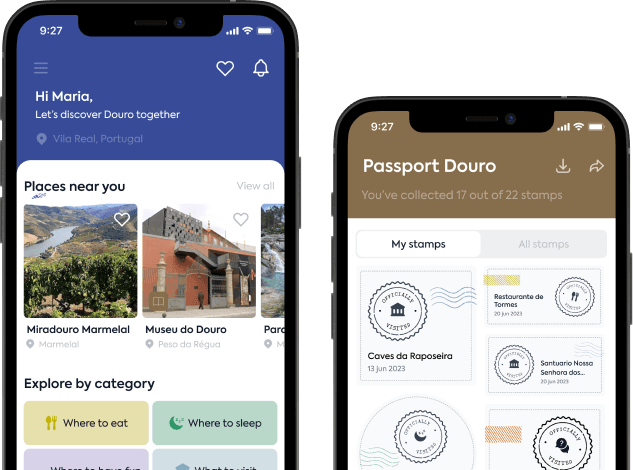
That was the case with Discover Douro, the digital tourism guide we built for CIM Douro covering 19 municipalities in the region, personalized profiles, an interactive map, itineraries and a "digital passport" system that encourages tourists to explore more locations. A single React Native codebase meant reaching both iOS and Android without duplicating effort, essential for a public-sector project with fixed timelines and budget.
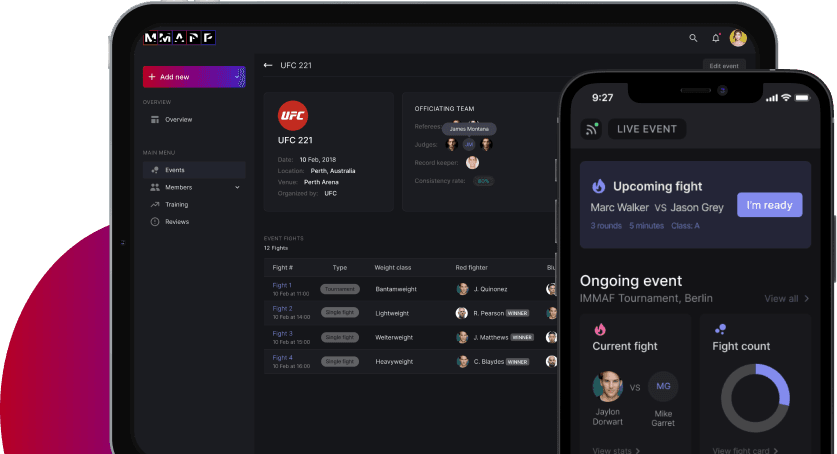
We also took this approach with MMAPP, an app for judges to score MMA fights with precision. Here, hybrid wasn't all-or-nothing: navigation and the general interface were built in React Native, but the real-time scoring tool, where accuracy and instant response were critical, was built in native code. It's a good example of how native and hybrid aren't mutually exclusive: often the best architecture combines both, depending on what each part of the app needs to do.
The reasons hybrid remains, in most cases, the smarter choice:
One codebase, two platforms. Less development time, lower maintenance cost, and changes that only need to be made once.
Faster delivery. For a startup validating an idea or a company launching a new feature, getting to market faster usually outweighs any marginal performance gain.
No longer synonymous with "lower quality". That used to be the argument against hybrid a few years ago. Today, done well, the average user can't tell the difference.
Once you take performance out of the equation, since in 2026 it's no longer the deciding factor in most cases, what's left is what was always the most honest criterion: what the product needs to do, who's going to build it, and how much time or budget is available.
Useful questions to get there:
How complex is the experience? Highly elaborate animations or interactions that are very specific, or even different, for each platform tip the scale toward native.
How much does it depend on the phone's hardware? The deeper the integration with specific hardware (camera, sensors or local processing), the more native avoids headaches.
How fast does it need to reach the market? If validating quickly and on both platforms is the priority, hybrid wins almost every time.
What team is available (or can be hired)? Often decides more than any technical comparison.
How long will this product last? An MVP built to test a hypothesis and a product meant to grow for years can benefit from different decisions.
This isn't a discussion that gets settled with a generic pros-and-cons table. We work with teams at very different stages, from startups validating the first version of a product, to companies with apps already in production for years, deciding whether it's worth rewriting. The answer is never the same twice, because the context is never the same twice.
If you're thinking about the right architecture for your next product, or reassessing a decision made a few years ago that no longer serves the business the way it used to, it's worth talking before writing the first line of code.