
From Spreadsheet to Custom Software: 5 Signs Your Operation Has Stagnated
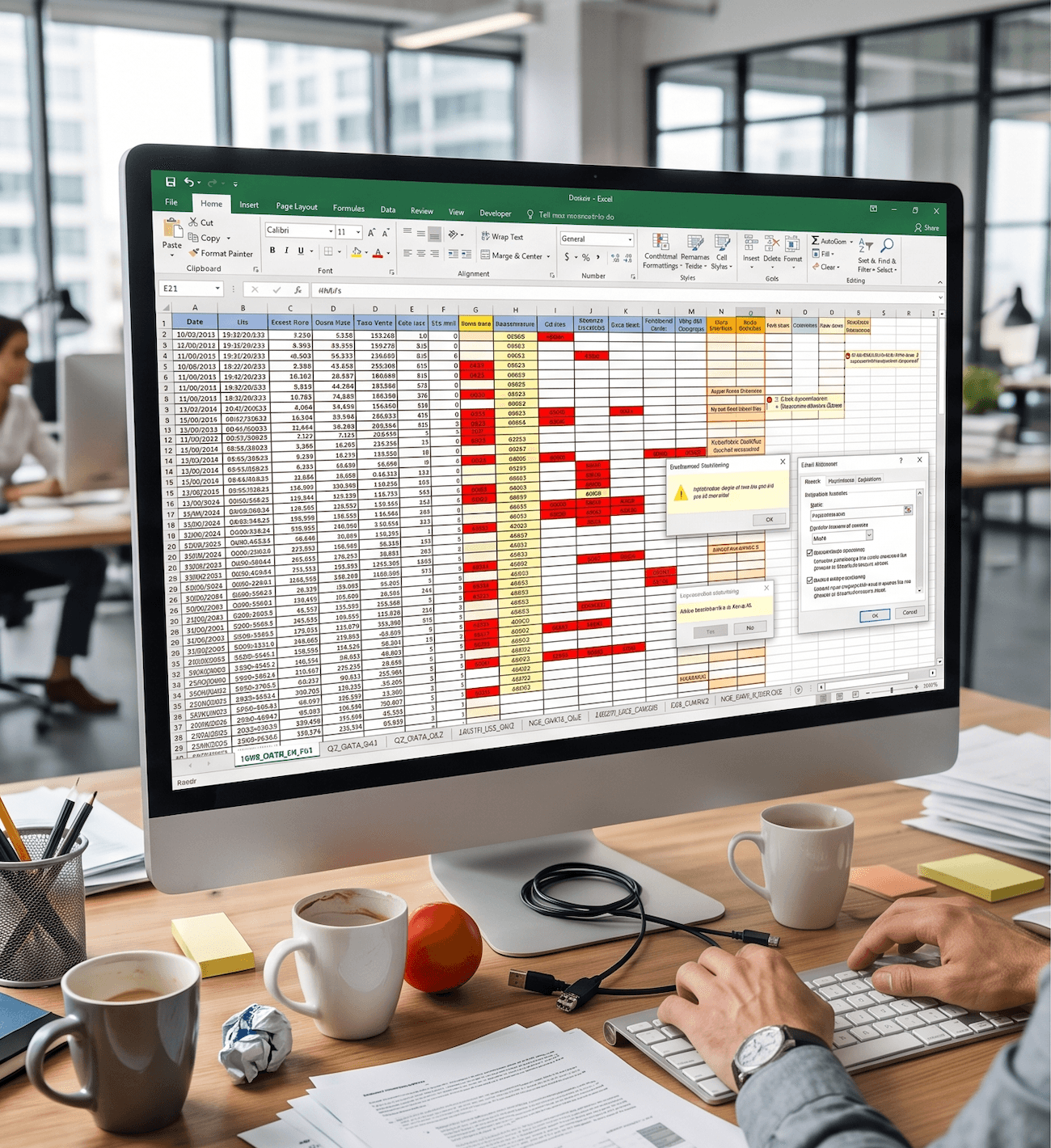
If nobody trusts the numbers anymore, if a single cell error now costs more than it used to, or if only one person really understands how the file works, your operation has already outgrown what a spreadsheet can support. Here are the five signs it's time to move to custom software.
If nobody quite trusts the numbers anymore, if a single wrong cell now costs more than it used to, or if only one person truly understands how the file works, your operation has already outgrown what a spreadsheet can safely support. These are the five signs that it's time to move to bespoke software.
There's always a spreadsheet somewhere at the centre of the business. It started small: a stock list, a timesheet, a client database. And it grew as the company grew, with more columns, more tabs, more formulas stacked on top of older formulas. It worked for years, which is exactly why nobody stops to ask whether it's still the right tool.
The problem is that a spreadsheet was never designed to scale with a business. It was designed to calculate. When it becomes the system a company actually runs on (stock, orders, invoicing, production, teams) it's doing a job it was never built for. That cost rarely shows up as a single line item. It's felt every day: in wasted time, in errors nobody catches, in decisions made on data nobody fully trusts anymore.
We work with businesses across different sectors digitising processes that, at some point, also lived inside a spreadsheet. There's a pattern that repeats itself almost every time: the operation doesn't stall overnight. It stalls gradually, and it only becomes visible once you know what to look for and can't find the answer.
Each department handles its own numbers: sales owns revenue, the warehouse owns stock, finance owns invoicing, and at month end, someone has to stitch it all together by hand into a final report. That's where things go missing: a figure gets pasted in out of date, a formula summing a fixed range of rows quietly excludes a new one, or a filter applied for a presentation never gets removed. In the next meeting, two people bring different numbers for the same metric, and nobody's quite sure which one is right.
Once this becomes a regular occurrence, the issue is no longer a one-off mistake. It's that there's no longer a single source of truth, there are several versions of the same reality, each slightly different, even when they're all sitting in the same shared folder. And a business that doesn't trust its own numbers is deciding blind, even if nobody says so out loud.
There's always someone who "understands the file", who knows where the macros are, why that tab is hidden, what happens if you touch that cell by accident. Often that person didn't even build the process. They're just the one who, over the years, kept patching whatever broke.
This is a serious dependency hiding behind normality. If that person goes on holiday, changes role, or leaves the company, the process stays. The knowledge to run it doesn't. What's left is a tool that still works, but that nobody can explain or maintain with any confidence.
Exporting from one system, pasting into another. Manually cross-checking invoicing data against stock data. Preparing the same report every week, always the same manual way, because no system talks to any other. It's real work, it takes up hours of skilled staff time, and it doesn't produce a single new decision, it just clears the ground so a decision can eventually be made.
This might be the most expensive sign of all, because it never shows up on a cost sheet. It's spread out, day after day, across a team that spends more time feeding tools than actually using them.
A formula error, back when the business was small, caused a small problem. At today's volume of orders, clients or transactions, the same mistake carries far more weight and is harder to catch before it does damage, because the sheer volume of data has made the file more complex and less transparent.
If operational errors seem to be happening more often, or their consequences are becoming more visible to clients and suppliers, that's not bad luck. It's a sign the tool can no longer handle the operation's current volume.
The team doubled, revenue tripled, new markets or product lines opened up. But the process underneath it all is still, at its core, the same one from five years ago, just with more tabs, more people touching the same file at once, and more people trying to make sense of a logic that only ever made sense when the operation was smaller.
A process that hasn't kept pace with the business stops being an operational detail. It becomes a brake. And the longer the company keeps growing on top of it, the more expensive and difficult it gets to fix later.
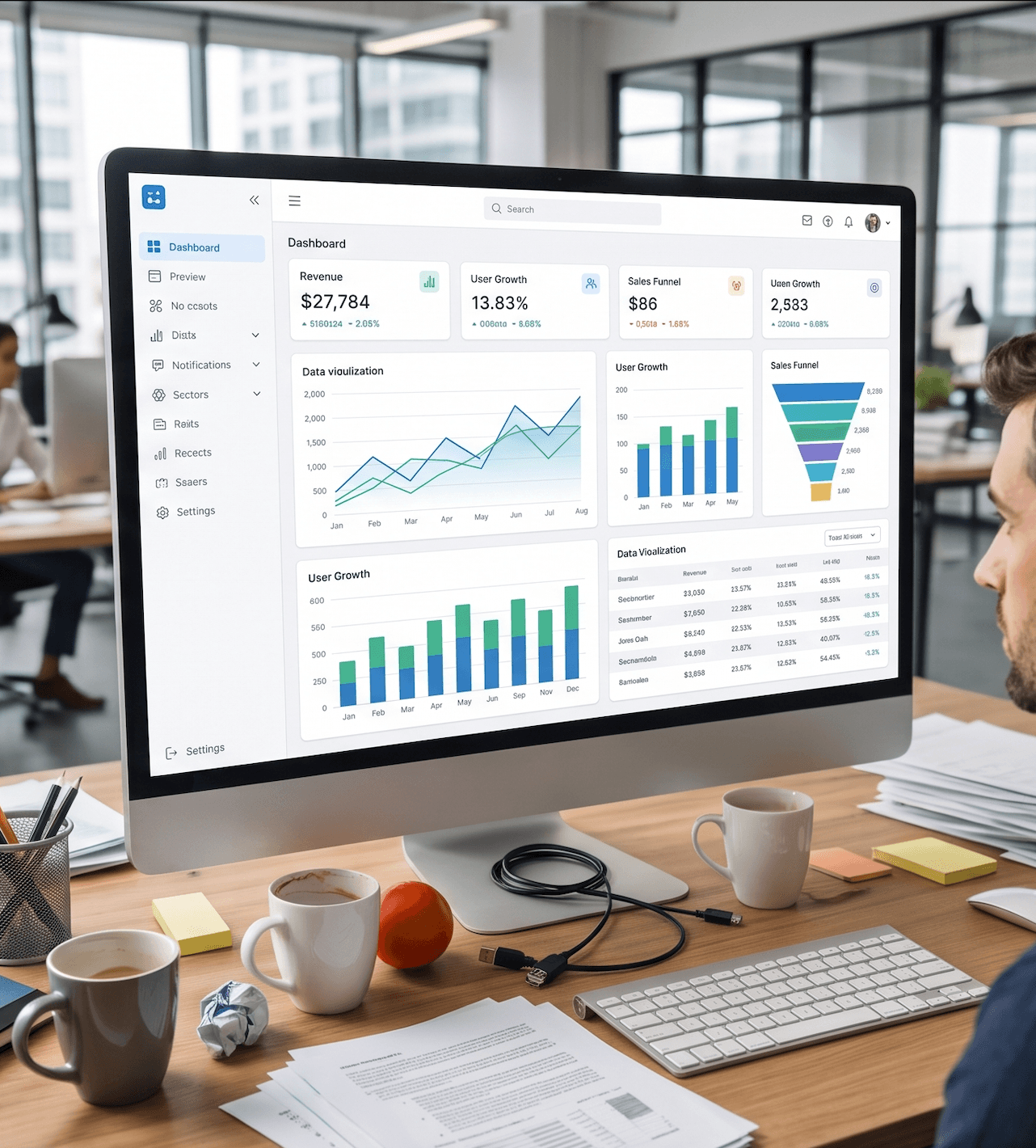
None of these signs on its own means everything needs replacing tomorrow. But when two or three show up at the same time, it's usually a sign the operation has already outgrown what even a well-built spreadsheet can safely support.
Bespoke software doesn't solve this by being more modern. It solves it by being designed around the business's actual process. Data ends up living in one place, with one single version of the truth. Business rules live in the system, not in one person's memory. Handoffs between departments stop depending on copy and paste. And the operation can grow without every new client, product or team member becoming another tab, another exception.
We don't think every company needs custom software, often an existing tool, properly configured, solves the problem perfectly well. That's why we always start with the same question, before talking about technology at all: what's the process that's holding the operation back, and what does it need to do that the spreadsheet can no longer manage?
From there, we design and build the software around how the company actually works, not the other way round. That means systems the team understands and uses without resistance. Systems that grow with the business instead of becoming another fragile file three years from now. And systems that give management back what a spreadsheet can no longer offer: data you can trust, exactly when you need it.
If you recognised two or three of these signs in your own company, you probably already know the problem isn't going away on its own, it'll only get more expensive to fix the longer it's left. It's worth talking through the specific process before deciding what to build.