
Gamification in product design: turning participation into experience
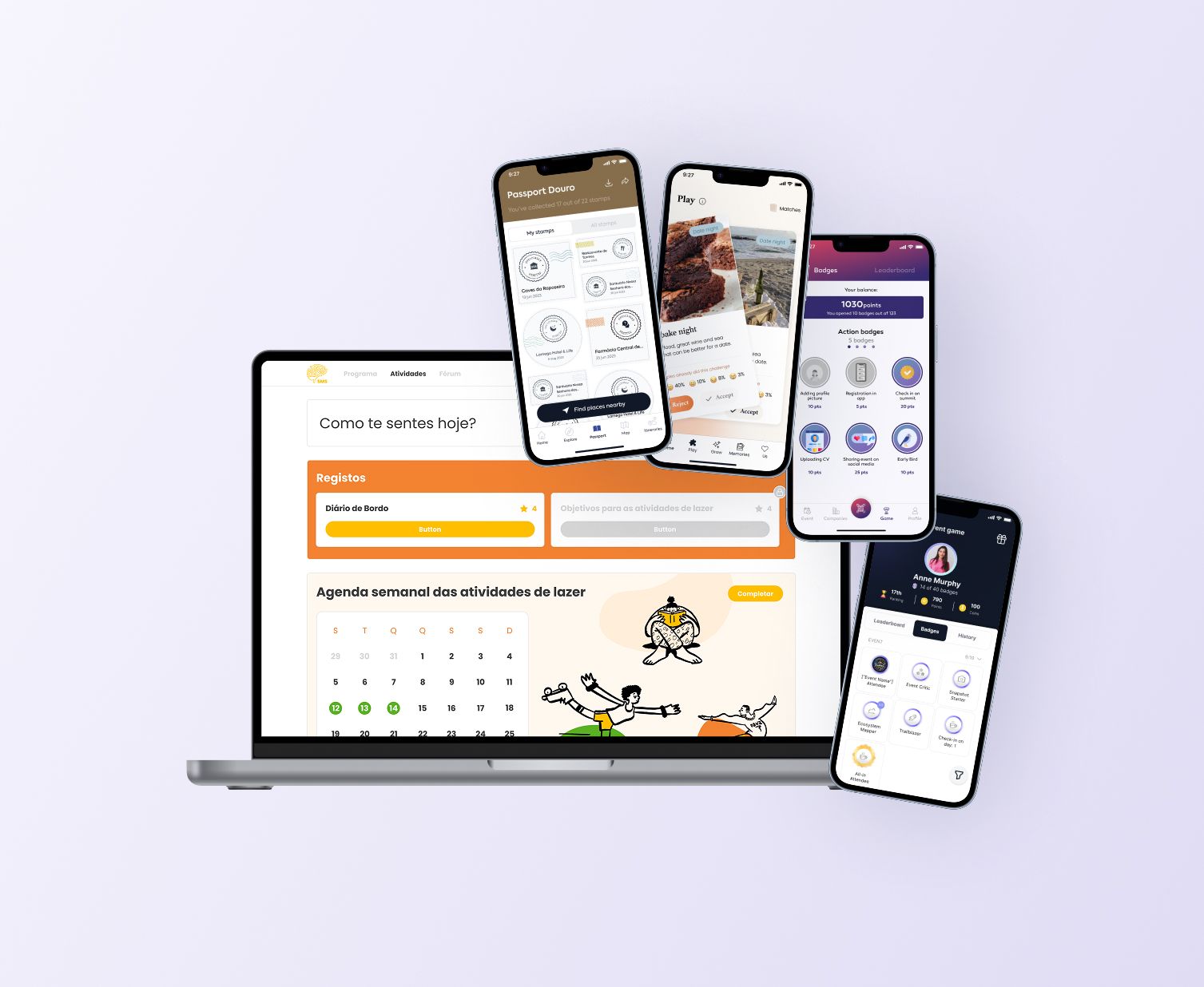
Gamification often gets reduced to a badge on a button or a generic reward popup. At Codepoint, we treat it as a layer of UX rather than decoration, a way of giving meaning to a user's effort: participating, coming back, exploring, progressing. It earns its place in the design when it serves a real product goal, and here are five projects where that happened.
klatchpoint. is an app for events and conferences, built to keep attendees engaged from start to finish. Each session can carry its own points, set by the organizer through a dedicated panel, and attendees collect those points and reward coins as they take part and check in on each day of the event.
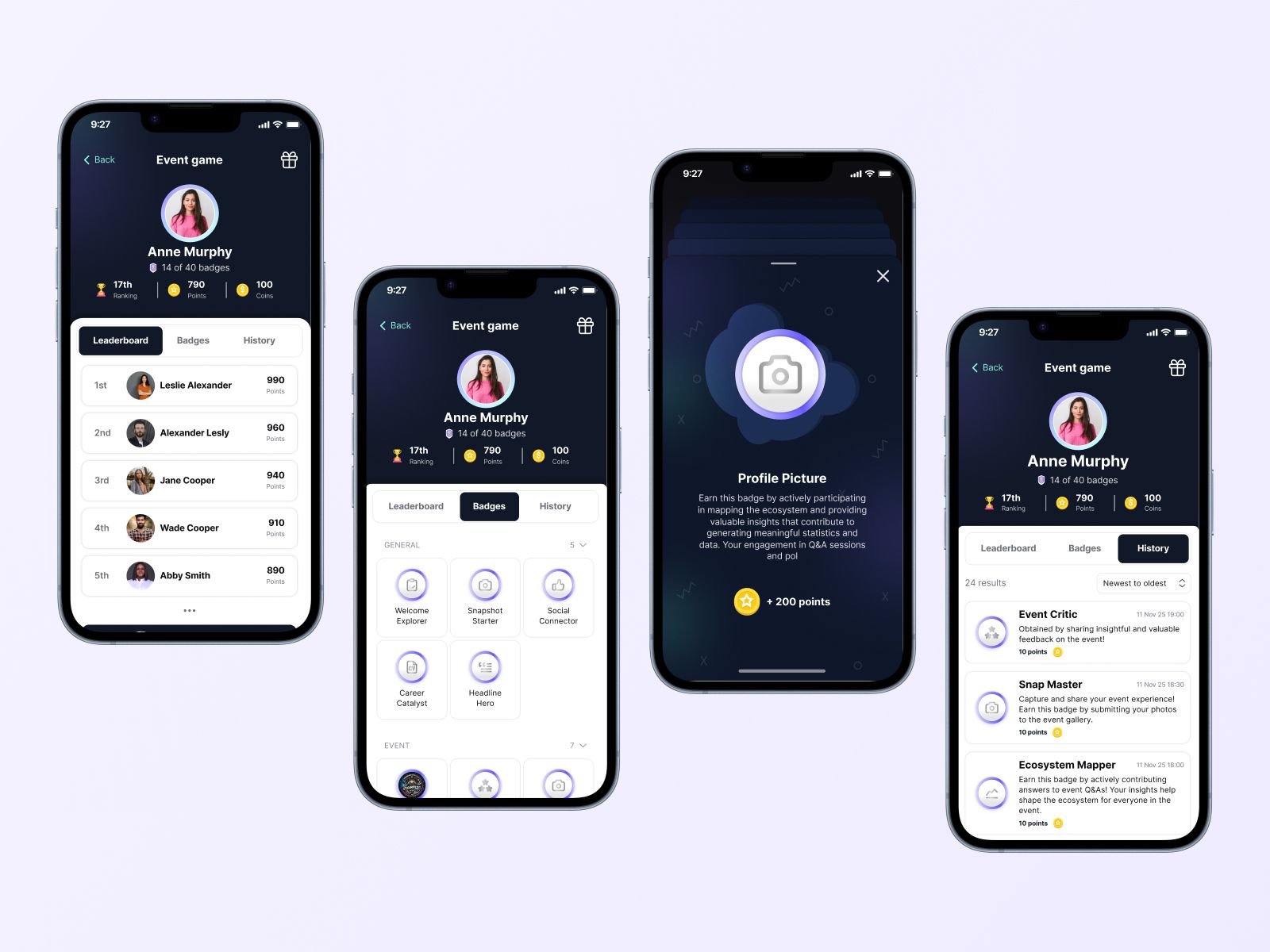
That progress stays visible through a set of badges that attendees unlock as the event unfolds, and a leaderboard showing the top 5 along with each attendee's own position.
Discover Douro invites visitors to explore points of interest through a digital passport. Every place visited adds a stamp to the collection, with progress always visible ("5 of 20 stamps") and a chance to win prizes on completing the passport.
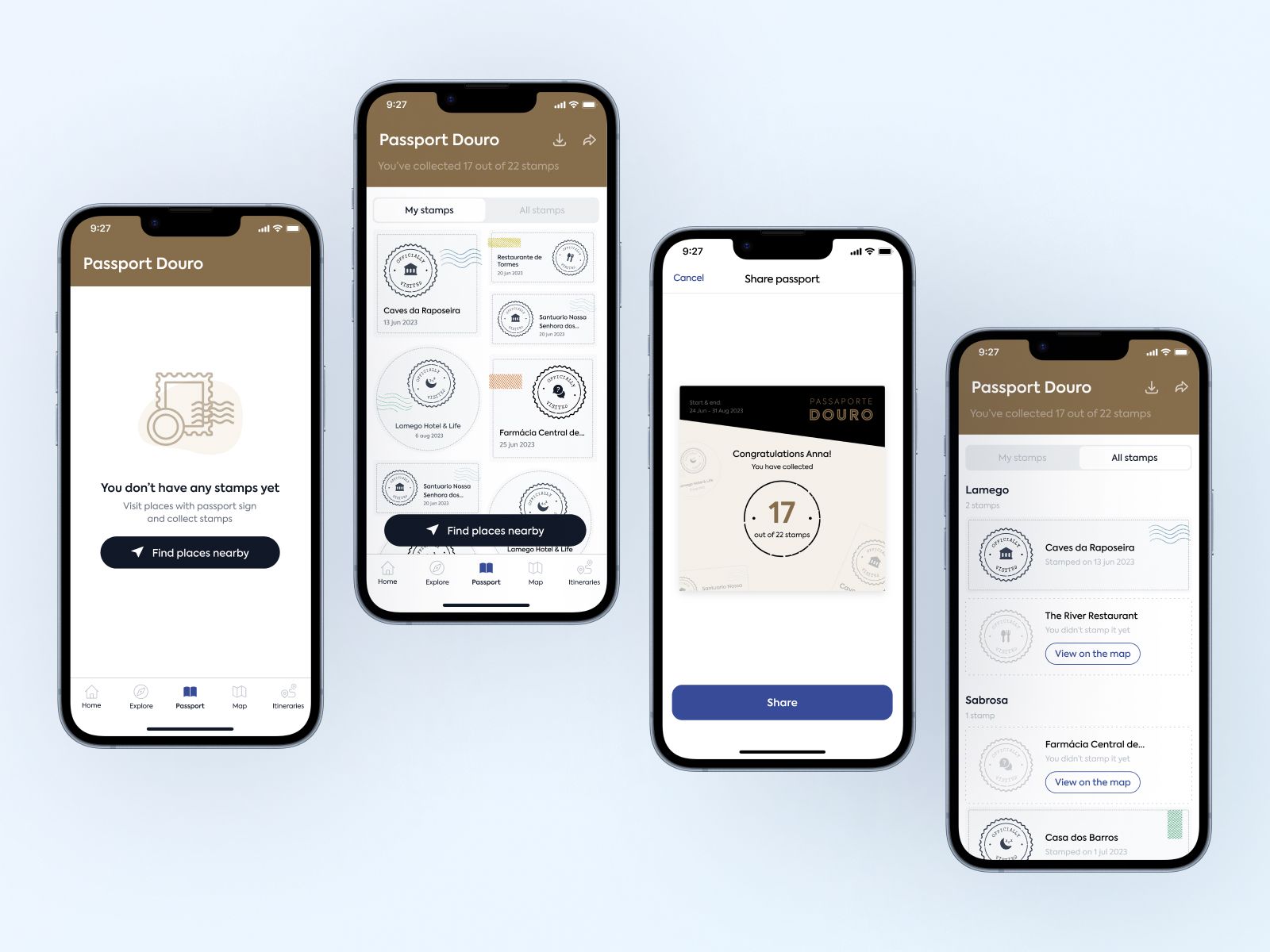
The mechanic turns a regular touring route into something closer to a treasure hunt, without ever losing sight of the main goal: introducing visitors to the region's heritage and local partners.
Formula is an app built for couples, and it uses gamification to encourage conversation and closeness. Every day brings a new question to answer, earning points and keeping a streak going as the couple takes part.
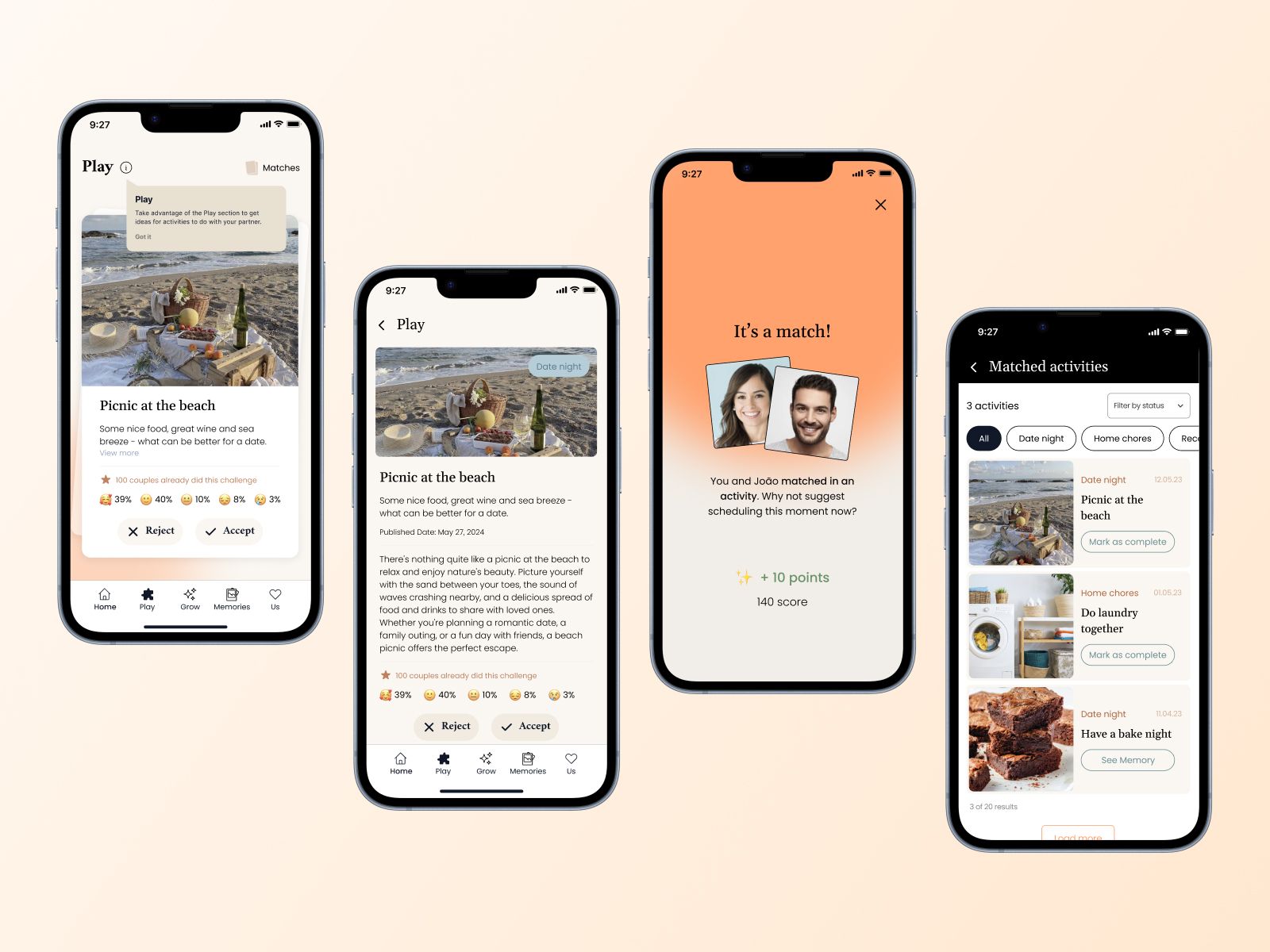
There are also challenges the two partners can accept together, and statistics comparing each partner's answers, turning sharing into something visual and motivating.
Startpoint runs career fairs and academic events, and uses gamification to encourage students to make the most of everything on offer. By visiting company booths, attending talks or joining activities, students scan a QR code and earn points, which translate into badges by category (companies, talks, activities).
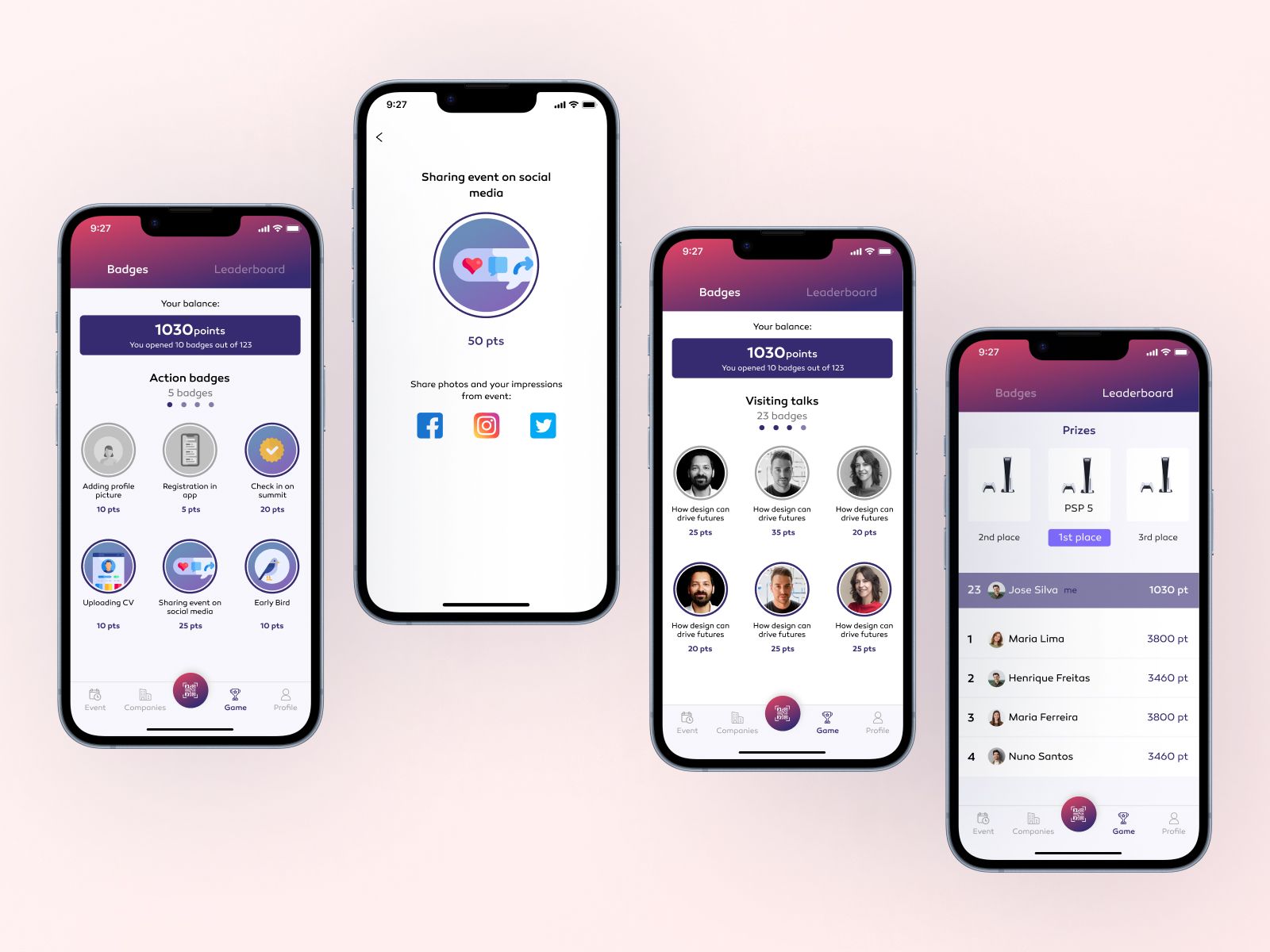
The system works both ways: company representatives can also scan a student's profile and award points directly, creating real interaction on the event floor, not just inside the app.
SMS brings together wellbeing and learning activities for a younger audience, with interactive quizzes that give instant feedback depending on whether the user gets an answer right or wrong, closing with an achievement screen and a trophy.
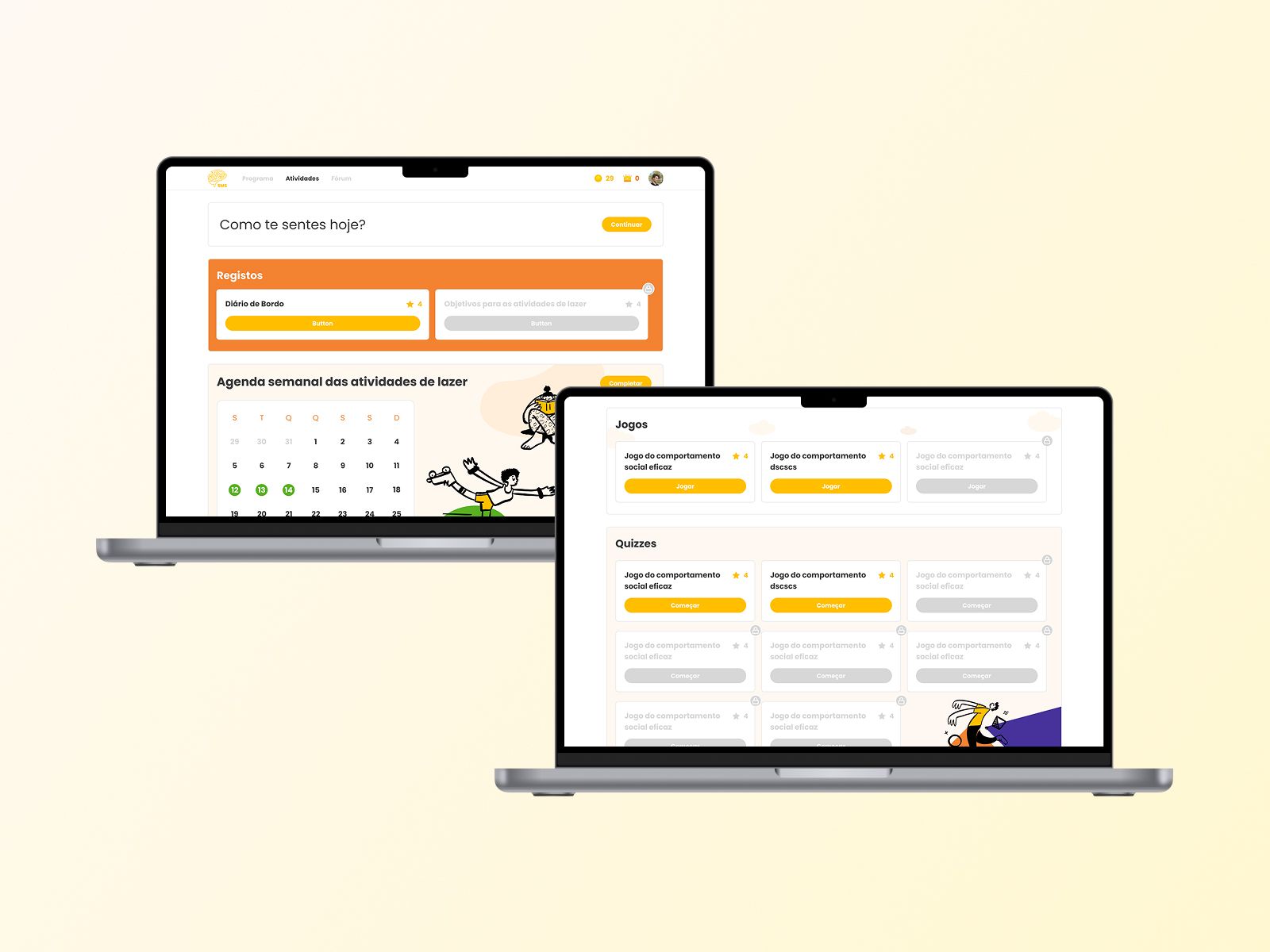
The weekly dashboard combines the leisure goals users set for themselves with a progress chart, making it easy to see at a glance whether the week is balanced.
In none of these cases did the starting point look like "let's add points." It was understanding what behavior the product needed to encourage, whether that meant keeping someone engaged through a three-day event or giving a couple a daily reason to talk. The dashboards, badges and leaderboards are just the visible surface of decisions that always start with the user experience.